> For the complete documentation index, see [llms.txt](https://docs.servoy.com/llms.txt). Markdown versions of documentation pages are available by appending `.md` to page URLs; this page is available as [Markdown](https://docs.servoy.com/reference/servoy-developer/object-editors/sql-editor.md).
# SQL Editor
## Overview
The **SQL Editor** is a tool designed for database management, allowing users to execute SQL commands and manage data. It provides an interface to connect to multiple databases, run queries, and view results.
## Installation
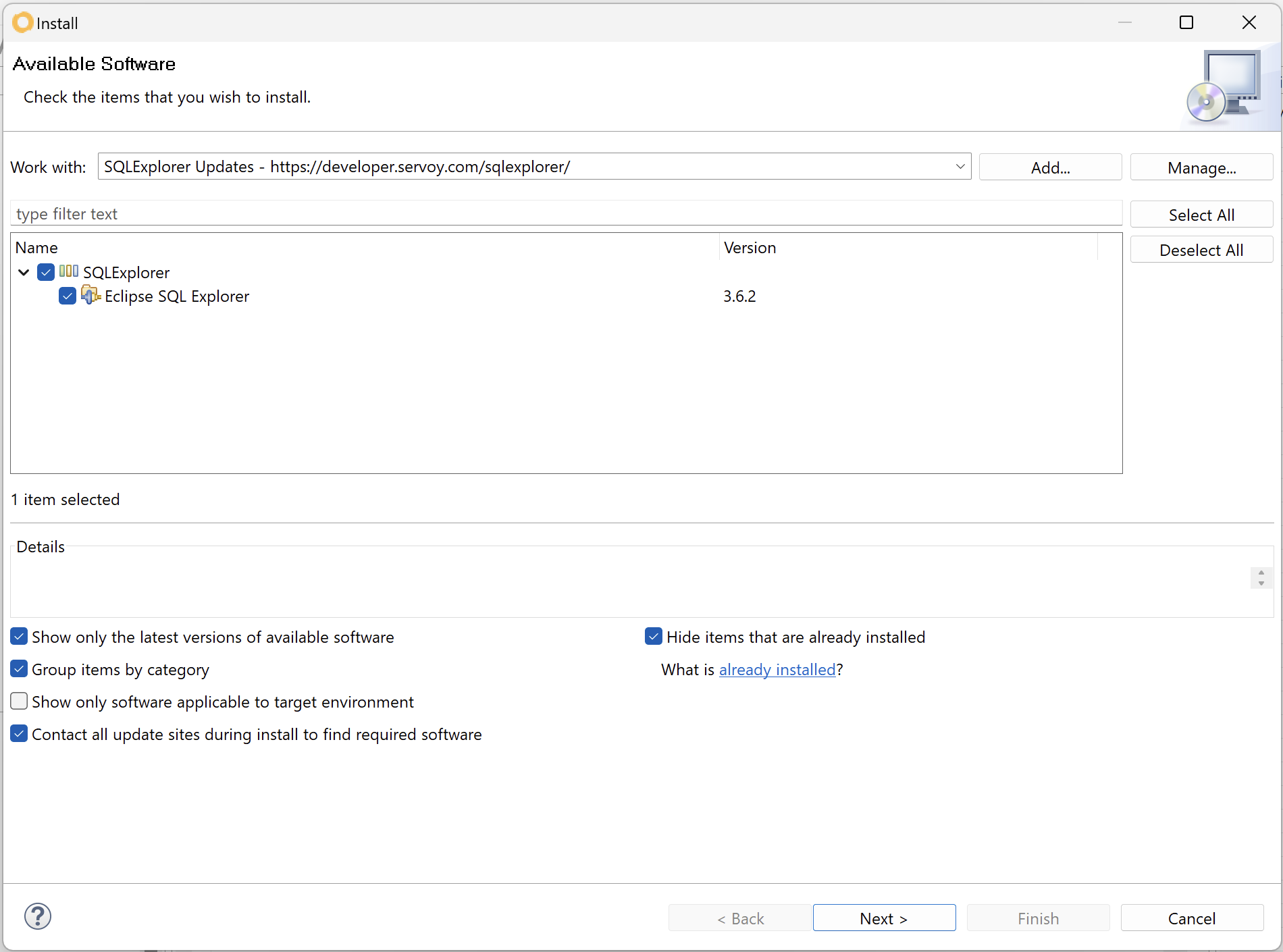
To access the SQL Editor, you need to install the SQL Explorer plugin. The installation process follows the standard procedure for Eclipse plugins:
1. Navigate to the menu and select *Help > Install New Software.*
2. Select the *SQL Explorer Updates* location
SQL Editor
3. Click **Next**, accept the license agreement, and then click **Finish**.
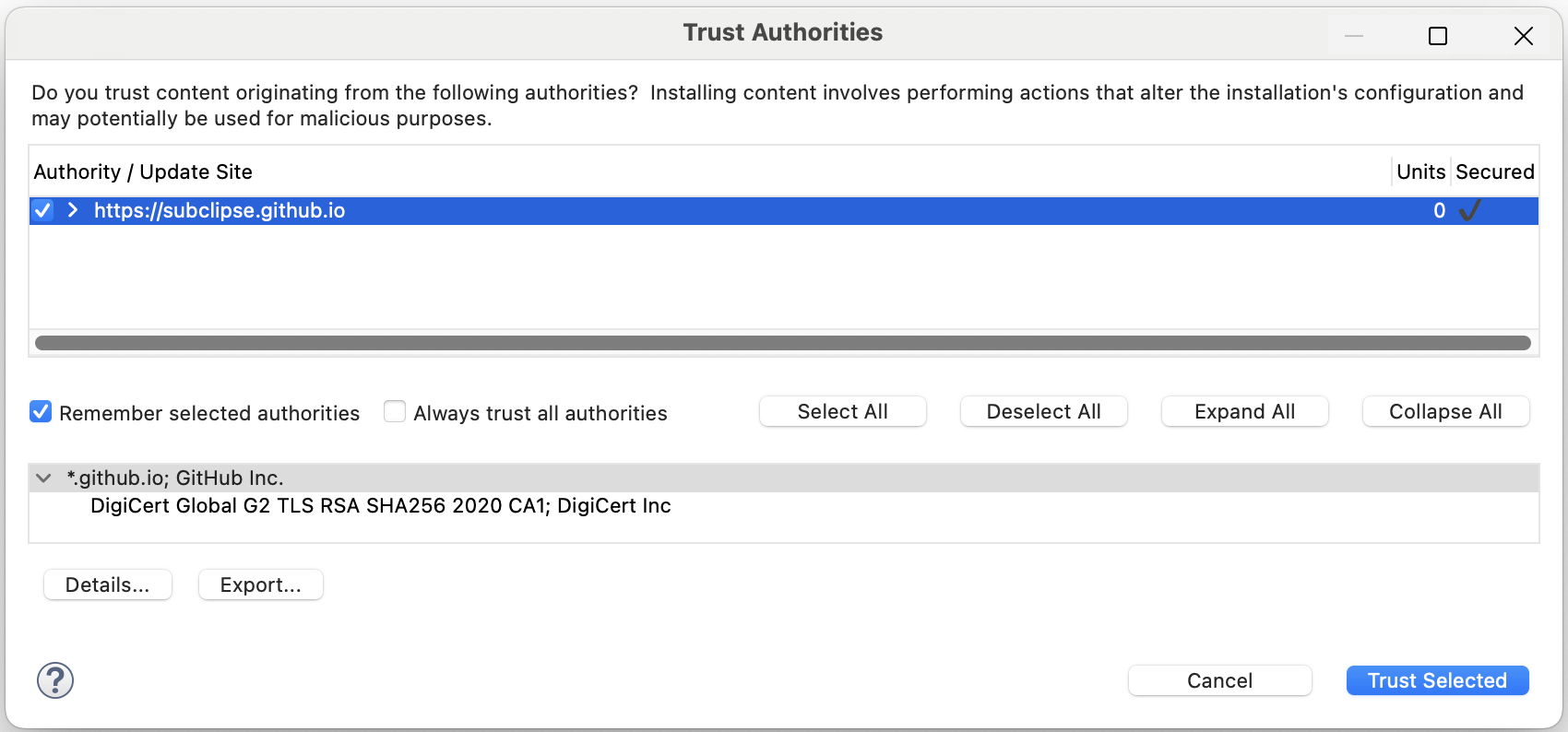
4. Trusting Certificates:
* During the installation process, a dialog will appear asking you to trust certificates from the update site.
Trusting certificates
* Accept other certificates which will appear in the process
* Once the installation is complete, you will be prompted to restart *Servoy Developer*.
## Using SQL Editor
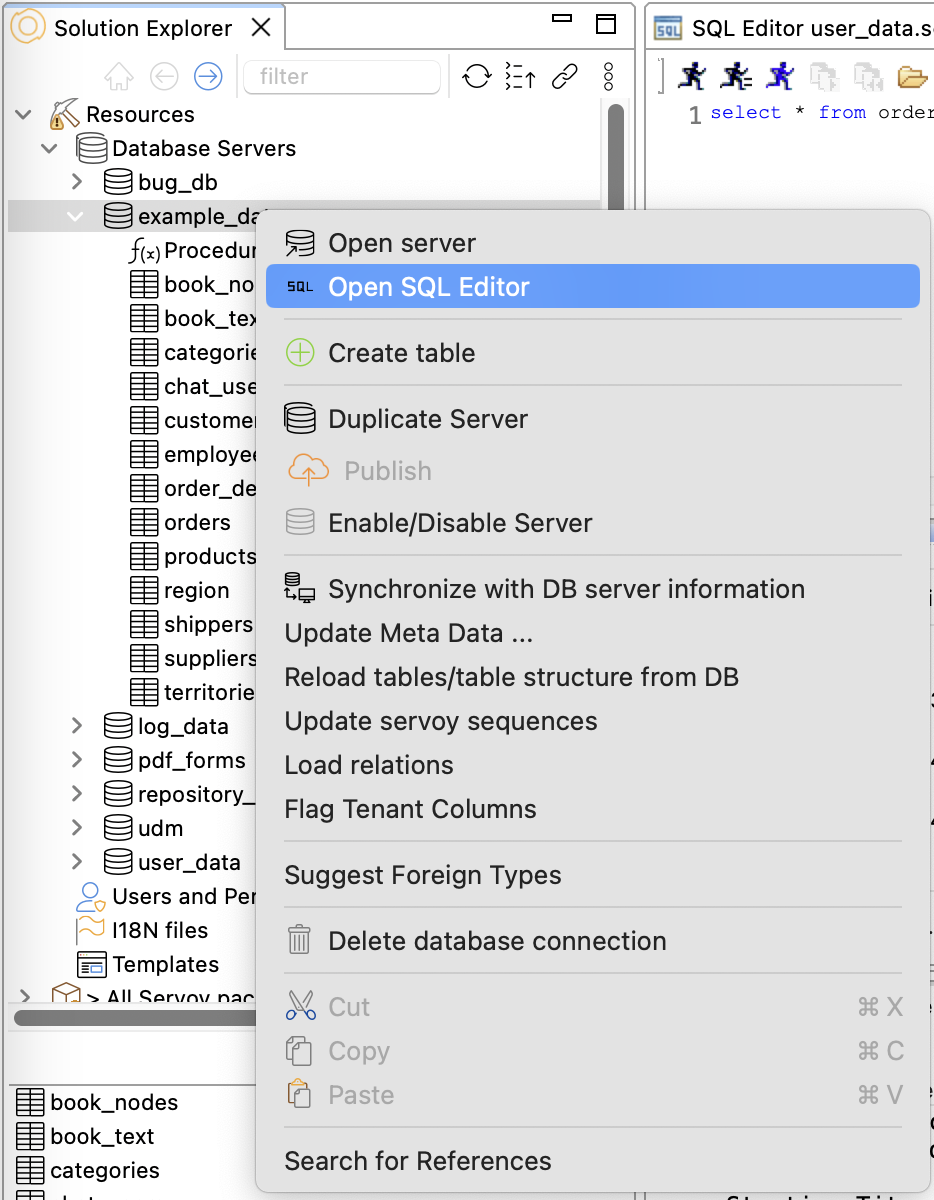
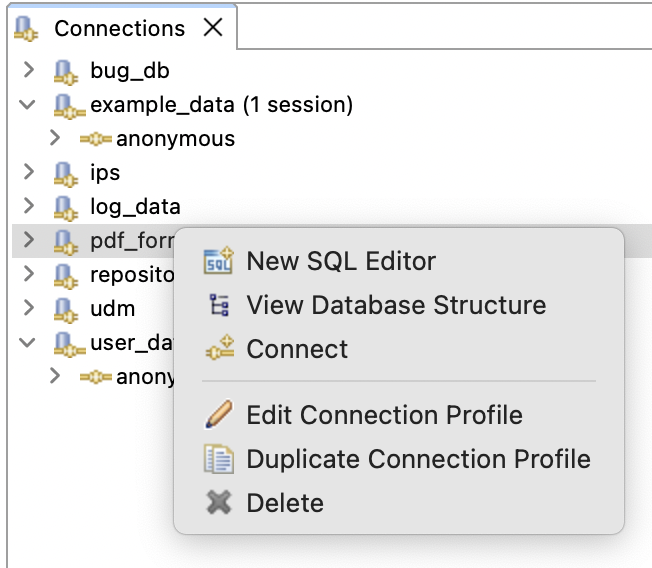
The SQL editor can be accessed through the context menu of any database of table.
Open SQL Editor
## SQL Editor overview
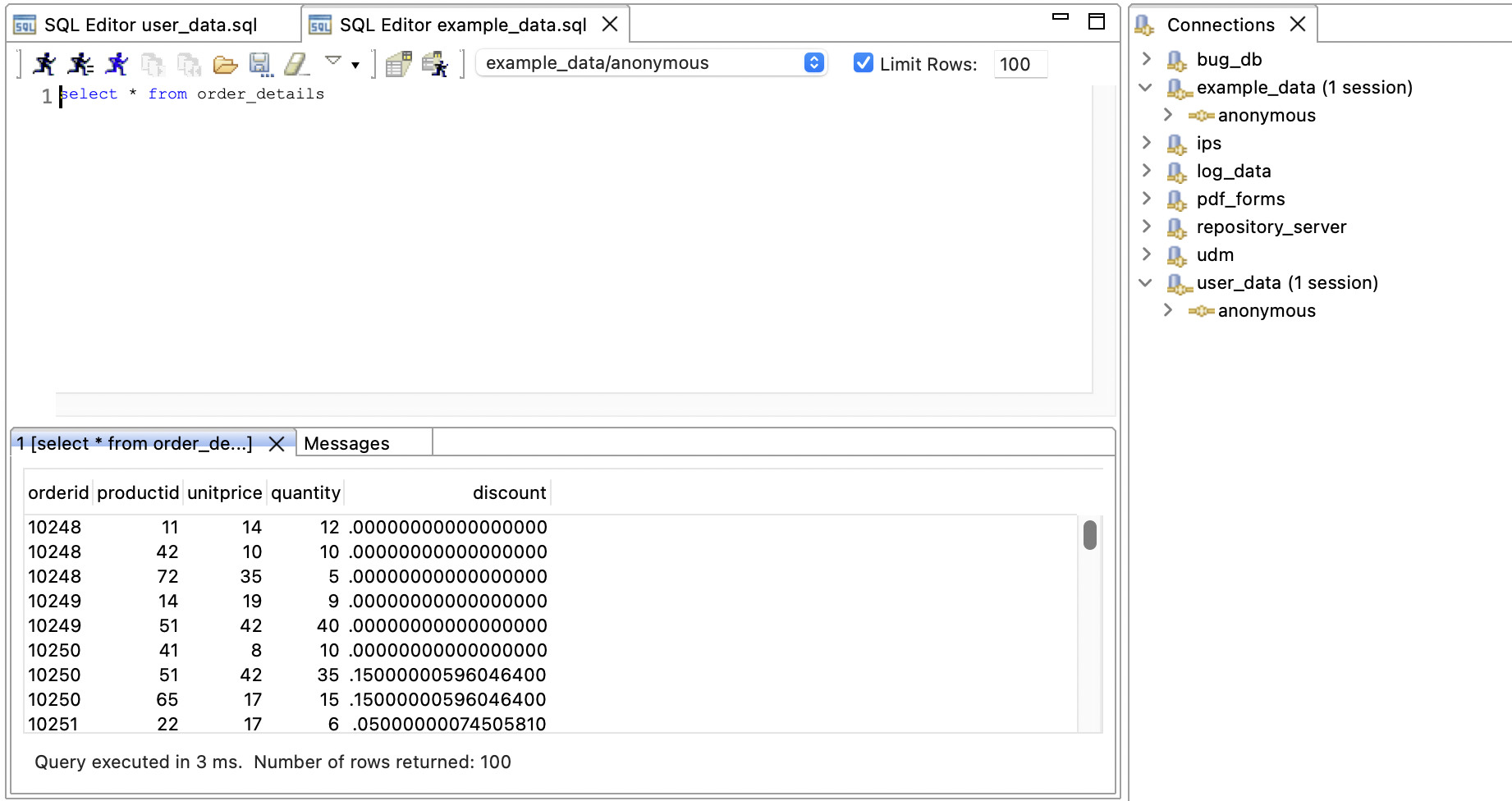
The SQL Editor in Servoy Developer is designed for managing and interacting with SQL databases directly within the IDE.
SQL Editor
#### SQL Editor Area
Each SQL connection is displayed in its own tab, allowing you to work on multiple SQL scripts simultaneously. For example, the screenshot shows tabs for user\_data.sql and example\_data.sql. Write the SQL query in the SQL input area and use the Execute button in the toolbar to run it. The query results will be displayed at the bottom.
#### Database Connection Selector
This dropdown allows you to select the database connection for the query. In the image, the selected value, **example\_data/anonymous**, shows the selected database and the connection type.
#### Limit Rows Option
This option allows you to limit the number of rows returned by the query.
#### Connections Panel
The Connections panel on the right side lists all available database connections, highlighting the databases with active SQL sessions (next to the connection name). In the image, we see that example\_data and user\_data both have active sessions. Various operations are available in this panel from the context menu.
SQL Editor
You may use any SQL editor to interact with the Servoy database; however, the integrated SQL Editor provides a faster and more convenient way to manage your databases directly within the Servoy Developer environment. This eliminates the need to install a third-party tool, streamlining the workflow and enhancing productivity.
---
# Agent Instructions
This documentation is published with GitBook. GitBook is the documentation platform designed so that both humans and AI agents can read, navigate, and reason over technical content effectively. Learn more at gitbook.com.
## Querying This Documentation
If you need additional information that is not directly available in this page, you can query the documentation by asking a question.
Perform an HTTP GET request on the following URL with the `ask` and `goal` query parameters:
```
GET https://docs.servoy.com/reference/servoy-developer/object-editors/sql-editor.md?ask=&goal=
```
`ask` is the immediate question: it should be specific, self-contained, and written in natural language.
`goal` is what the user is ultimately trying to achieve, the reason they need the answer. Sharing it helps GitBook give you a better, more relevant answer. A goal is most helpful when it describes the outcome the user wants rather than restating the question. For example, with `ask=how do I create an API token`, a goal like `automate deployments from our CI pipeline` lets GitBook tailor the answer to that use case.
The response will contain a direct answer to the question and relevant excerpts and sources from the documentation.
Use this mechanism when the answer is not explicitly present in the current page, you need clarification or additional context, or you want to retrieve related documentation sections.